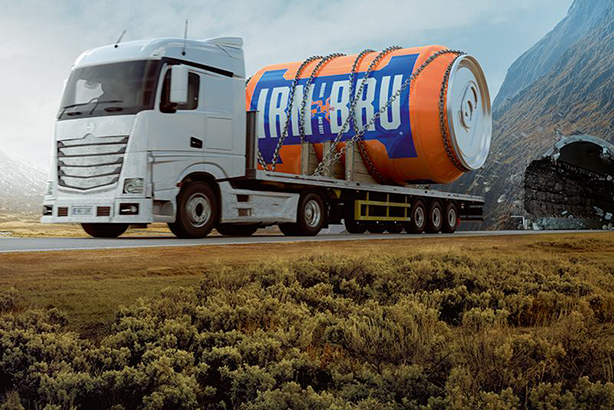
Scotland’s favourite drink
What is IRN BRU? If you ask a Scottish person, they will get offended. IRN BRU is a fizzy drink, that is so common in Scotland, that it became part of its culture. It is difficult to go on a walk in major Scottish cities and not catch a label of IRN BRU with your eye hanging somewhere on a poster. You will find it in any grocery store, bar and even hospitals. Scotland cares dearly about IRN BRU.
The sad reality is that IRN BRU could not care less about Scotland or the health of the people of Scotland. All this business cares about is profit.
Health impact of IRN BRU
According to the NHS guidance, food colour E110 (sunset yellow FCF) that is used in IRN BRU is linked to hyperactivity and can trigger ADHD symptoms. Here is a brief research history behind this food colour additive and the IRN BRU response.
1996 – a study on mice is performed which showed that Sunset Yellow affected their reproductive and neurobehavioral parameters.
2004 – first study based on randomised, double-blinded, placebo-controlled trial on children gets published that shows increased hyperactivity in children due to Sunset Yellow consumption.
2008 – Another study gets published in the very respected journal Lancet which again showed the adverse effect of Sunset Yellow on children. The study is then referred to as the “Southampton Study”.
2008 – The Food Standards Agency announced its decision to phase out Sunset Yellow as a food colourant from foods due to the outcomes of aforementioned research.
2010 – IRN BRU claims they are committed to remove Sunset Yellow from their drinks
2011 – IRN BRU puts a “temporary” label on all their products claiming the adverse effects on children
2011 – A. Salmond (the one who is now acquitted of 14 charges of sexual assault) steps in to protect IRN BRU and asks the European Commissioner for Health and Consumer Policy to increase the acceptable level of food colouring. The acceptable level is increased from 10mg to 20mg. IRN BRU can keep its recipe.
2024 – The “temporary” label on IRN BRU is still on the bottle. EU regulations no longer apply.
Sunset Yellow is not the only additive in IRN BRU, there are a few others that are even less researched. Not only that, but generally the consumption of fizzy drinks has been linked to metabolic diseases such as diabetes. In financial year 2023/2024 Irn-Bru revenue climbed to £400m, up nearly 26% when compared with 2022/23. Will NHS get any of that? I doubt so.
So what?
There are many things in life that are enjoyable and let us bond with other people. While in the Mediterranean it is olives, nuts, cheese and grapes, in Scotland it is IRN BRU. I strongly believe however that culture is malleable. Even IRN BRU has been there for less than a 100 years. By making a conscious choice we can switch to kombucha or kvass or some other healthier drink and create a new culture.
Do you want to keep investing into a business that has just reached £400m of revenue in 2024, contributed an absolute zero of that to NHS and harmed your health and the health of people around you? Let me know what you think in the comments.
 Health Experiment
Leave a comment